

When you buy an LED screen, the most important technical value you will see is the pixel pitch. Names such as P2.5, P3.9, P8 or P10 refer to this value. Choosing the right pixel pitch directly affects both picture quality and your budget. In this guide we explain what pixel pitch is, how to choose it by viewing distance, and which value fits which project.
What Is Pixel Pitch (P Value)?
Pixel pitch is the distance between the centres of two neighbouring pixels on an LED screen, measured in millimetres. A P3.9 screen has 3.9 mm between pixels; a P10 screen has 10 mm. The smaller the pixel pitch, the more pixels fit into the same area and the sharper the picture.
Pixels per square metre can be estimated as (1000 ÷ pixel pitch)². For P2.5 that is (1000 ÷ 2.5)² = 160,000 pixels/m²; for P10 it is (1000 ÷ 10)² = 10,000 pixels/m².
How to Choose Pixel Pitch by Viewing Distance
A common rule of thumb in the industry is: minimum viewing distance (metres) ≈ pixel pitch (mm), and comfortable viewing distance is roughly 2–3 times that. So a P4 screen should be viewed from at least 4 metres, with the most comfortable picture at 8–12 metres. Closer than that, individual pixels become visible.
| Pixel pitch | Minimum viewing distance | Typical use |
|---|---|---|
| P1.2 – P1.9 | 1–2 m | Meeting rooms, control rooms, retail, LED posters |
| P2 – P2.9 | 2–3 m | TV studios, lobbies, shopping malls, airport lounges |
| P3 – P4 | 3–4 m | Conference halls, stages, large studios |
| P5 – P6 | 5–6 m | Semi-outdoor areas, facades, totem screens |
| P8 – P10 | 8–10 m and more | Stadium screens, perimeter LED, billboards |
Examples from Taglig Projects
Our own projects show how pixel pitch changes with the application:
- TGRT Main News Studio (Istanbul): a P2.5 Sirius LED screen for a studio filmed at close range.
- TRT Arı TV Studio (Ankara): a 144 m² P3.9 Alhena studio screen.
- Istanbul Airport baggage conveyors: 36 double-sided P2.5 screens seen by passengers up close.
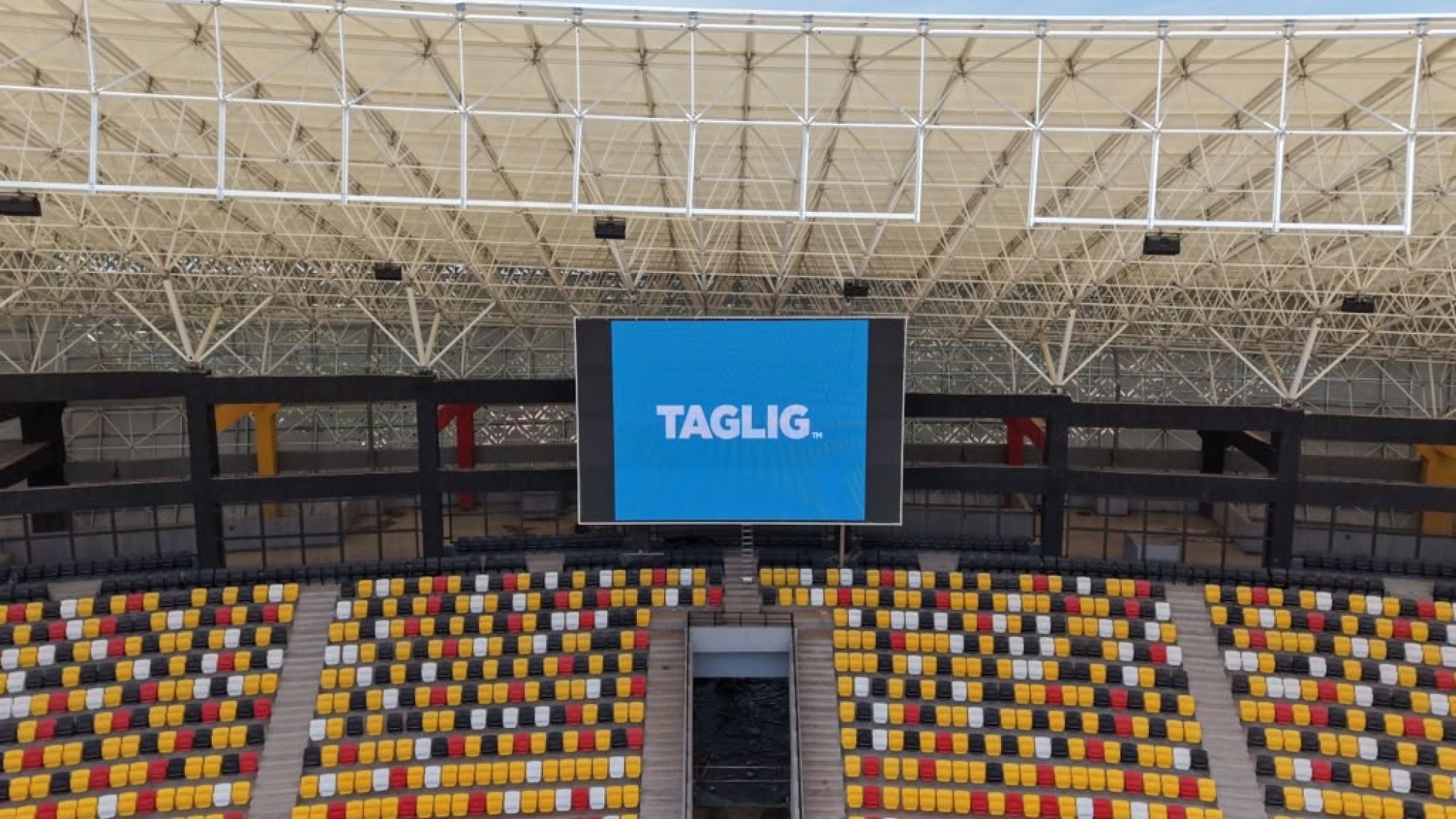
- Akii-Bua Stadium (Uganda): two 10.56 × 6.72 m P8 giant screens with 7,500 nits, viewed from the stands.
- Giresun Çotanak Stadium: a 246 m² P10 perimeter LED system around the pitch.
See all examples on our projects page.
What Else to Check Besides Pixel Pitch
- Brightness (nits): 600–1,500 nits is usually enough indoors, while outdoor screens in direct sunlight need 5,000 nits or more.
- Refresh rate: studios and stages filmed by cameras need a high refresh rate (for example 3,840 Hz) to avoid flicker.
- Protection class (IP): outdoor modules must resist rain and dust; indoor products are fine with ratings such as IP40.
- Service access: front-service screens are easier to maintain when mounted on a wall.
Let Us Help You Choose
Tell us where the screen will be installed, its size and how far viewers will be, and we will recommend the right pixel pitch and price for your project. Explore our indoor and outdoor LED screens, the P1.86 LED Poster and our stadium LED screen solutions, or get a quote.
Frequently Asked Questions
What does the P value mean?
The P value is the distance between the centres of two neighbouring pixels on an LED screen, in millimetres. On a P2.5 screen the pixels are 2.5 mm apart; on a P10 screen they are 10 mm apart.
Is a smaller pixel pitch always better?
For screens viewed up close, yes: the picture is sharper. For screens viewed from far away, a very small pixel pitch brings no visible benefit and only raises the cost. The right choice depends on viewing distance.
Which pixel pitch is right for a stadium screen?
Giant screens viewed from the stands usually use P6–P10, and pitch-side perimeter LED systems usually use P8–P10. At Akii-Bua Stadium in Uganda we installed P8 screens.
Which pixel pitch should I choose for a store or office?
Store, lobby and office screens that people look at from 1–3 metres work best with P1.5–P2.5. The Taglig LED Poster, for example, uses a P1.86 pixel pitch for a sharp picture at close range.
How does pixel pitch affect price?
A smaller pixel pitch means more LEDs per square metre, which raises the price. A P2.5 screen has 160,000 pixels per m², while a P10 screen has 10,000.