

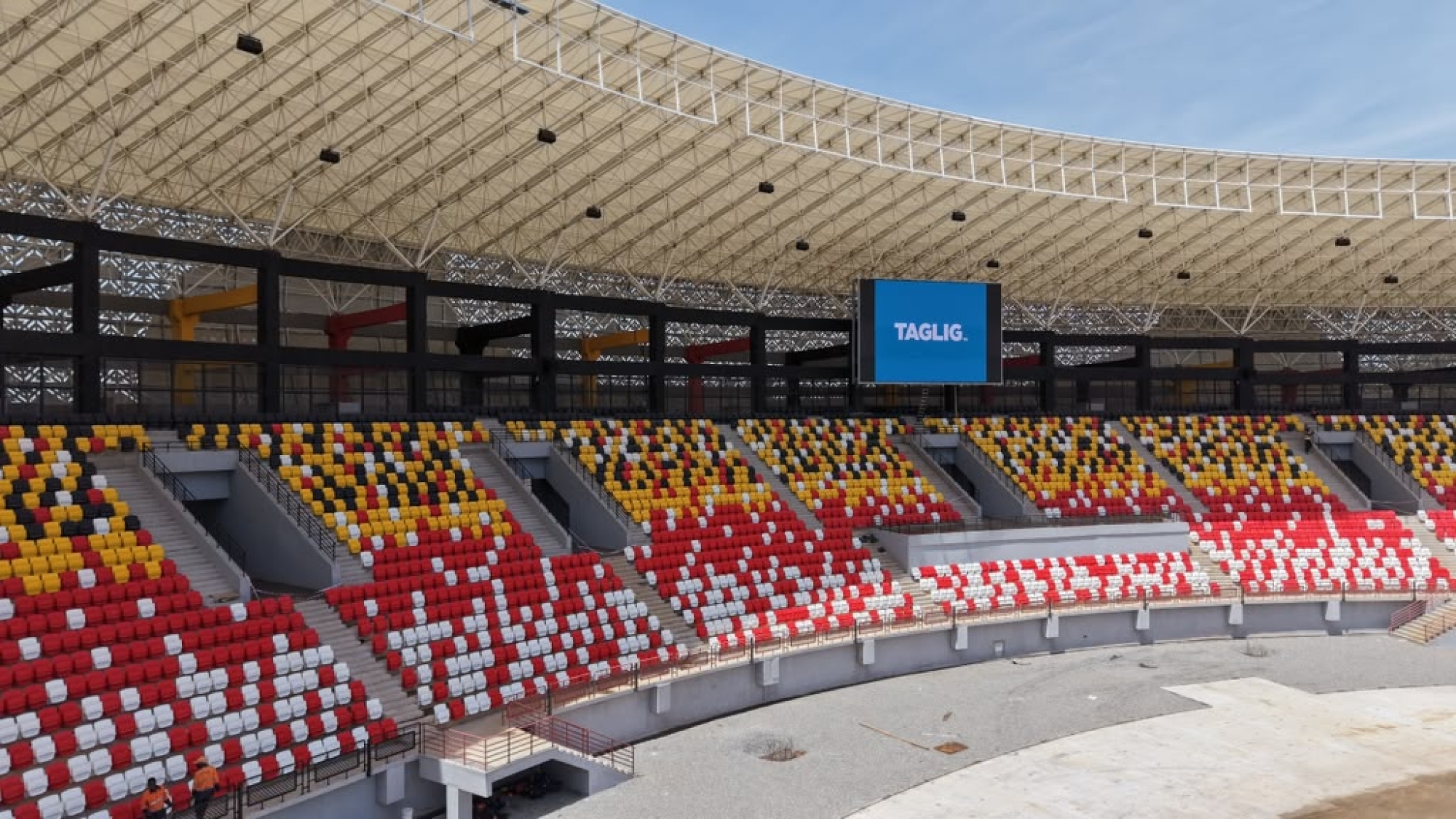
A stadium LED screen project is much more than ordering a display. Site survey, support structure, power infrastructure, shipping and on-site installation are linked steps, and a gap in any one of them delays the whole project. This guide explains, step by step, how contractors, clubs, federations, municipalities and stadium investors can plan a project from the first survey to match day. To see the product options, visit our stadium LED screen page.
Taglig is a Turkish LED screen manufacturer. We produce our displays in our own factory in Merzifon, Amasya, and we have installed them in stadiums from Türkiye to Uganda, from Georgia to The Gambia. The steps below are based on that field experience.
1. Define the Need: What Will the Stadium LED Screen Do?
The first planning question is functional, not technical. Will the screen only show score and time, or will it also carry live video, replays and sponsor advertising? The answer defines the screen type, the size and the software you need.
- Giant video screen: live footage, replays, fan engagement and advertising.
- LED scoreboard: score, time and team information. We compare the options in LED scoreboards for sports fields.
- Perimeter LED boards: rotating sponsor messages around the pitch during the match. See LED perimeter systems.
In many projects all three systems are planned together. Sourcing them from a single manufacturer simplifies content management, spare parts and maintenance.
2. Site Survey and Measurements
During the survey, the screen location, distance to the stands, sun orientation and the condition of the support structure are assessed. These inputs are the basis for choosing the right screen size and brightness.
- Viewing distance: the distance from the nearest and the farthest seats to the screen.
- Orientation: whether the screen faces direct sunlight; sun-facing screens need high brightness.
- Mounting area: stand roof, steel structure behind the goal, or a free-standing pole structure.
- Power and data: the power line to the screen and the cable or fiber route between the control room and the display.
For international projects the survey can start remotely with photos, drawings and measurements from the site, and be completed with an on-site visit when needed. This is how we typically begin projects in Africa and the Middle East.
3. Technical Design: Size, Pixel Pitch and Brightness
Four parameters are evaluated together when designing a stadium LED display:
| Parameter | Driven by | Practical note |
|---|---|---|
| Screen size | Viewing distance, mounting area, budget | Legibility from the farthest stand is the reference. |
| Pixel pitch | Minimum viewing distance | Stadium giant screens commonly use values such as P8–P10. |
| Brightness (nits) | Sun exposure, open or covered venue | Open-air stadiums need high brightness for daylight visibility. |
| Protection class | Rain, dust and impact risk | Outdoor screens must be protected against water and dust. |
We explain pixel pitch in more depth in our LED screen pixel pitch guide. As a real example, for the Akii-Bua Stadium in Lira, Uganda we manufactured two giant screens measuring 10,560 × 6,720 mm, with P8 pixel pitch and 7,500 nits brightness. The high brightness was chosen so that the image stays readable during daytime matches under the equatorial sun.
The design phase also fixes the cabinet layout, service access (front or rear maintenance), steel structure loads and the control system.
4. Budget and Quotation
The cost of a stadium LED screen is driven by screen area, pixel pitch, brightness, structure, installation location and software. We cover each factor in stadium LED screen cost factors. To get an accurate quotation faster, share the following with your supplier:
- Stadium location and capacity
- Required screen types (giant screen, scoreboard, perimeter) and approximate sizes
- Photos or drawings of the mounting area
- Target delivery date of the project
For contractors working on tenders, it helps to involve the LED screen manufacturer while the structural design is still open. Screen weight, dimensions and power requirements can then be built into the steelwork and electrical plans instead of being adapted later.
5. Manufacturing, Testing and Shipping
Production follows the approved design. Before shipping, modules and cabinets should be assembled and tested in the factory for image quality, color uniformity and electrical safety. This step greatly reduces problems on site.
For international projects the logistics plan should be made from the start: packaging, container loading, customs documents and road transport from the port to the stadium. Because Taglig manufactures in Türkiye, we are well positioned to serve stadium projects in Africa, the Caucasus and the Middle East, as our deliveries to Uganda, Burkina Faso, The Gambia and Georgia show.
6. On-Site Installation, Commissioning and Training
Installation covers structure assembly, cabinet mounting, power and data connections, calibration and software setup. Control room operators are then trained on content upload, score management and the advertising playlist. The maintenance plan and spare parts stock should also be agreed at this stage, especially for venues far from the manufacturer.
Stadium Projects by Taglig
- Akii-Bua Stadium, Lira – Uganda (2026): 2 giant screens, 10,560 × 6,720 mm, P8, 7,500 nits
- Bobo Dioulasso – Burkina Faso (2026): P10 perimeter, 184 m²
- Giresun Çotanak Stadium – Türkiye (2025): P10 perimeter, 246 m²
- The Gambia (2024): P10 perimeter, 184 m²
- Dinamo Arena – Georgia (2023): P10, 66 m²
- Yeni Malatyaspor – Türkiye (2018): P10 perimeter, 224 m²
- Atatürk Olympic Stadium – Türkiye (2016): TG-OF Vega P10 scoreboard, 117 m²
See all references on our projects page.
Request a Technical Proposal and Site Survey
Whether you are building a new stadium or renovating an existing one, planning the screens at the start of construction saves both cost and time. Explore the options on our Taglig stadium LED screen solutions page and send your request for a technical proposal and site survey through our get a quote form. You can also reach us at +90 532 375 95 72, +90 358 233 83 33 or taglig@taglig.com.
Frequently Asked Questions
How long does a stadium LED screen project take?
It depends on the screen area, whether the support structure is ready and the shipping distance. A firm schedule is given for each project after the survey and design approval.
Which pixel pitch is right for a stadium giant screen?
Pixel pitch is chosen according to the minimum viewing distance. Because spectators sit far from the screen, stadium giant screens commonly use values such as P8–P10; P8 was used at Akii-Bua Stadium.
Is the screen visible in daylight in an open stadium?
Yes, if it has sufficient brightness. Sun-facing screens need a high nit value; for example, the screens at Akii-Bua Stadium deliver 7,500 nits.
Do you supply and install stadium LED screens in Africa and the Middle East?
Yes. We have completed stadium projects in Uganda, Burkina Faso, The Gambia and Georgia, and we plan manufacturing, shipping and on-site installation together for international clients.
What information do you need for a quotation?
The stadium location, required screen types and approximate sizes, photos or drawings of the mounting area and the target delivery date help us prepare a quotation quickly.