

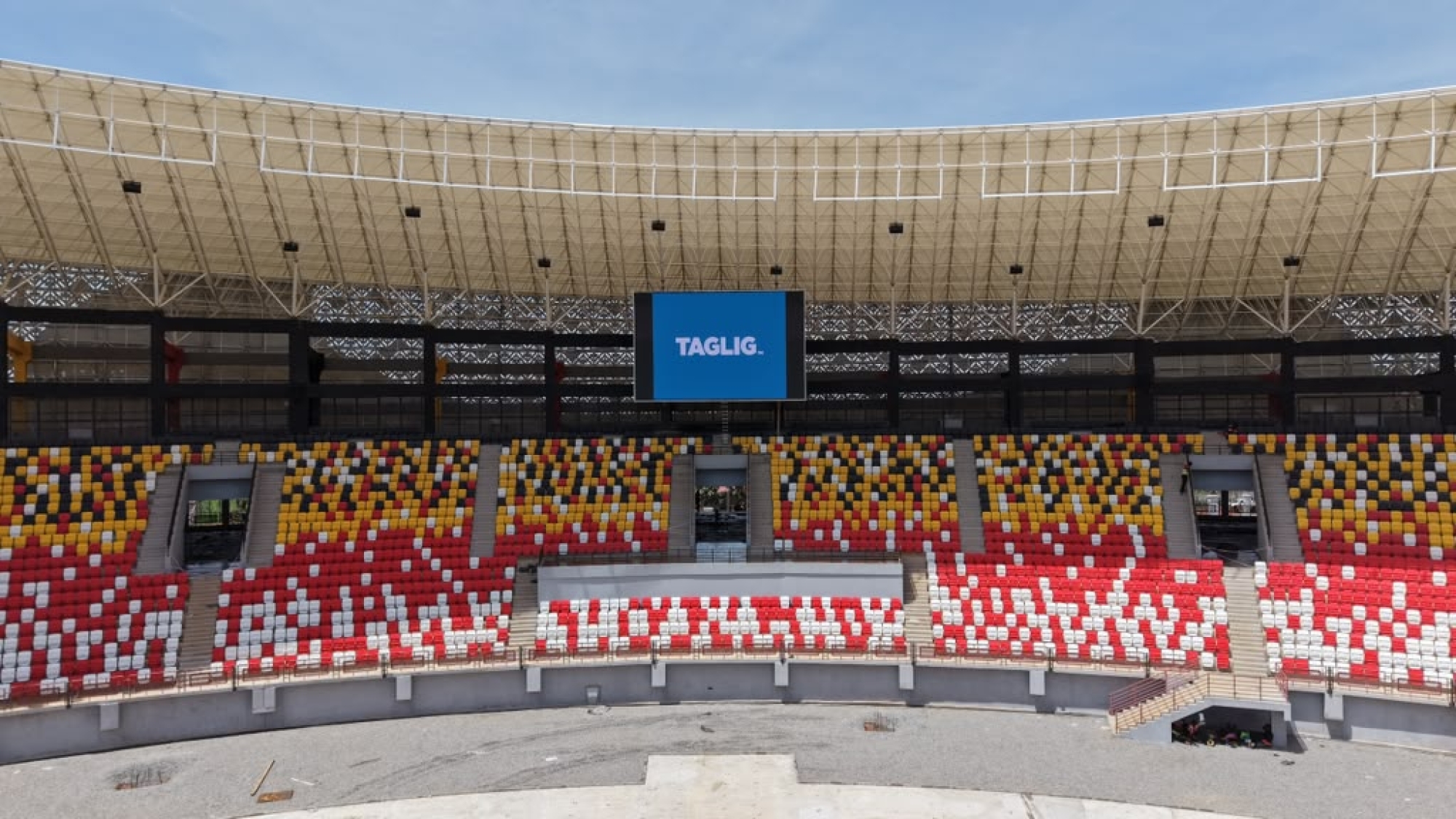
The first question in almost every stadium LED screen project is “what does it cost per square metre?” In practice, the budget of a stadium screen is shaped by much more than its area: the pixel pitch chosen for the viewing distance, the brightness needed to stay readable in sunlight, the steel structure that carries the screen, the control system and the country where the project is built. Drawing on the stadium screens Taglig has installed in Turkey and across Africa, this article walks through the factors that actually drive a quote.
1. Screen size and pixel pitch for the viewing distance
The foundation of the cost is screen area combined with pixel pitch (the P value). As the pitch gets smaller, the number of LEDs per square metre rises, increasing module cost as well as power and control requirements. In stadiums the nearest seats are usually tens of metres from the screen, which is why P8 and P10 are the most common choices for giant screens and scoreboards.
To choose correctly, start with the closest and farthest viewer distances, then define the content: scores, replays, advertising. A pitch finer than necessary raises the budget while adding sharpness nobody in the stands will notice. We cover this in detail in our LED screen pixel pitch guide.
2. Brightness, protection rating and climate
In open stadiums the screen competes with direct sunlight during day matches. For readability, 5,000 nits or more is a common target, and the need is even greater in equatorial countries. High brightness requires efficient LEDs and a robust power infrastructure.
Cabinets must also withstand rain, dust and temperature swings. Outdoor-rated cabinets (such as IP65), corrosion-resistant materials and proper ventilation add cost compared with indoor screens, but they are essential for a long service life.
3. Refresh rate, grey scale and broadcast compatibility
If matches are televised, the screen must not flicker or show scan lines on camera. Driver ICs with a high refresh rate (for example 3840 Hz) and good grey-scale performance directly affect broadcast quality. This choice is reflected in module cost, but in a broadcast venue it is not the place to save money.
4. Steel structure, mounting and service access
The most underestimated item in a giant screen budget is the supporting structure. Whether the screen is mounted on a stand roof, on a free-standing pole system or on an existing structure, together with wind load, soil survey and structural calculations, changes the quote significantly. Front or rear service access also shapes the design: rear service requires a walkway platform.
For perimeter LED the structure is simpler, but impact protection against balls and players, adjustable tilt stands and quick assembly become important. See our LED perimeter product page for details.
5. Control system, software and scoreboard integration
The video processor, sending and receiving cards, redundant data lines and content management software form a separate part of the budget. Requirements such as live score, clock and replay feeds, minute-by-minute sponsor scheduling on the perimeter line and synchronised operation of several screens determine the hardware needed.
6. Shipping, customs, installation and maintenance
The project country has a direct impact on cost. International projects add container shipping, customs clearance, the installation crew’s time on site, cranes and local power infrastructure. In the long run, spare-module stock, warranty coverage and remote technical support should be planned so the screen keeps running reliably for years.
Examples from Taglig stadium projects
| Project | Year | Solution | Area / Size |
|---|---|---|---|
| Akii-Bua Stadium, Lira, Uganda | 2026 | 2 × P8 giant screens, 7,500 nits | 10,560 × 6,720 mm each |
| Bobo Dioulasso, Burkina Faso | 2026 | P10 perimeter LED | 184 m² |
| Giresun Çotanak Stadium, Turkey | 2025 | P10 perimeter LED | 246 m² |
| The Gambia | 2024 | P10 perimeter LED | 184 m² |
| Dinamo Arena, Georgia | 2023 | P10 LED screen | 66 m² |
| Yeni Malatyaspor, Turkey | 2018 | P10 perimeter LED | 224 m² |
| Atatürk Olympic Stadium, Istanbul | 2016 | Vega P10 scoreboard | 117 m² |
At Akii-Bua in Uganda, 7,500-nit brightness and a P8 pitch were chosen for the equatorial sun; in Burkina Faso and The Gambia, shipping and on-site installation were planned during the quotation stage. You can browse more of our work on the projects page.
What to prepare for an accurate quote
- Screen location (roof, behind the stands, pitch side) and approximate dimensions
- Closest and farthest distance from the stands to the screen
- Whether matches are broadcast on television
- Details of the existing structure and power supply
- Project country, city and target delivery date
With this information we can define the right configuration from our stadium LED screen solutions together. For a project-specific price, fill in the get a quote form or call us on +90 532 375 95 72.
Frequently Asked Questions
Why can’t a stadium LED screen price be calculated from square metres alone?
Screen area matters, but pixel pitch, brightness, cabinet type, steel structure, control system, shipping and installation conditions affect the total cost just as much. Two screens of the same size can therefore receive very different quotes.
Which pixel pitch is right for a stadium giant screen?
The closest viewing distance decides. In stadiums where the stands are tens of metres from the screen, P8 and P10 are the most common choices. A smaller pitch gives a sharper image but means more LEDs and higher cost per square metre.
How bright should an outdoor stadium screen be?
Open stadiums in direct sunlight need high brightness for daytime readability; 5,000 nits or more is a common target. The P8 screens Taglig installed at Akii-Bua Stadium in Uganda deliver 7,500 nits.
How does perimeter LED compare with a giant screen in terms of cost?
They serve different purposes. Perimeter LED forms a long, low line around the pitch, where impact protection, adjustable tilt stands and sponsor content scheduling matter most. A giant screen sits on an elevated structure, so steel work and wind-load engineering weigh heavily on the budget.
How does an international stadium project affect the cost?
Shipping, customs clearance, local power infrastructure, the installation crew’s time on site and spare-parts stock are added to the quote. Taglig has delivered stadium projects in Uganda, The Gambia, Burkina Faso and Georgia by planning these items from the start.
How can I get a quote for a stadium LED screen?
Share the screen location, approximate dimensions, closest viewing distance and the project’s country and city through Taglig’s get-a-quote form, or call +90 532 375 95 72.